The Number That Should Be on Every Board Agenda
On May 20, 2026, HCLTech released its AI Impact Imperatives report, based on a global survey of 467 senior executives responsible for AI investments at enterprises with more than $1 billion in annual revenue. The headline finding is one of the most consequential data points published this year: nearly 43% of major AI initiatives at large enterprises are expected to fail.
Not fail to impress. Not fail to meet stretch targets. Expected to fail entirely.
What makes this finding particularly significant is the diagnosis. The risk is not driven by lack of experimentation or access to tools, but by the difficulty of translating ambition into consistent, enterprise-wide outcomes. The tools are there. The budget is there. The executive sponsorship is there. What is missing is the organizational infrastructure to convert all of that into durable results.
HCLTech CTO Vijay Guntur framed it directly: "AI has moved from being a technology initiative to becoming an enterprise operating reality. What leaders are grappling with now is not whether AI can deliver value, but how organizations adapt their structures, decision rights and risk tolerance to keep pace with it."
That framing is the most useful one available to C-suite leaders looking at this data. The question is no longer whether AI works. It is whether your organization is structured to make it work at scale. And for 43% of enterprises, the honest answer is not yet.
Speed Is Amplifying Failure, Not Preventing It
The HCLTech report surfaces a dynamic that deserves to sit at the center of every AI strategy conversation in 2026. The majority of organizations are deploying AI into workflows without adequate preparation of the people expected to work alongside it, and this is cited as a primary execution risk.
This is the execution gap in its most concrete form. Organizations are moving fast because the competitive pressure to move fast is real and the board-level expectation that AI investment produces visible results is now acute. But speed without the foundational work in place does not accelerate success. It accelerates failure. As Guntur noted, the pressure to move fast is real, but without the right investment in people, in helping them understand, trust and work effectively alongside AI, speed can just as easily amplify failure as success.
Most organizations have interpreted AI urgency as a reason to compress timelines, launch more pilots, and expand deployment scope as quickly as possible. The HCLTech data suggests the opposite conclusion: urgency is a reason to be more disciplined about execution readiness before deployment, not less. The 43% that are expected to fail are not moving too slowly. They are moving into production faster than their organizational, data, and governance infrastructure can support.
What the Execution Gap Actually Looks Like
The execution gap is not a single problem. It is a cluster of related failures that compound each other, and understanding where it surfaces is more useful than knowing it exists.
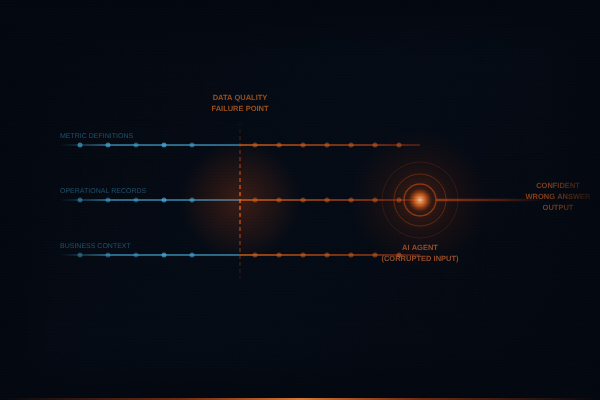
The first failure point is people readiness. Deploying AI into a workflow that the people using it do not understand, do not trust, or have not been prepared to work alongside produces predictable results: workarounds, resistance, shadow tools, and outputs that bypass AI entirely despite the investment in deploying it. The HCLTech report is explicit that this is the primary execution risk, not a secondary one. Technology readiness without people readiness is not partial success. It is a setup for the 43%.
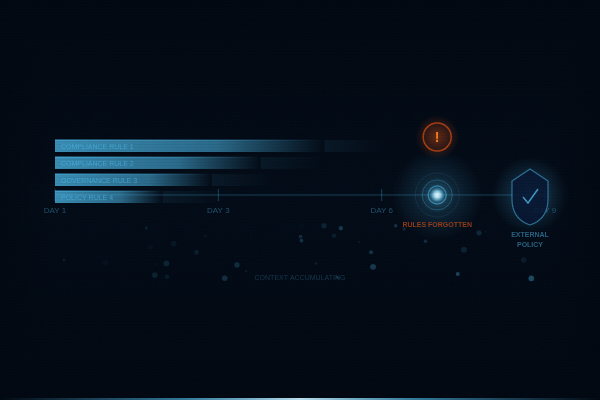
The second failure point is governance without accountability. The HCLTech report notes that 79% of organizations say governance and responsible AI considerations significantly influence deployment decisions. But there is a meaningful difference between governance as a deployment criterion and governance as an operational framework with named owners, defined decision rights, and active enforcement. Organizations that have governance documents but not governance accountability are not governing. They are documenting.
The third failure point is the misalignment between timelines and readiness. The report specifically highlights shrinking timelines for impact as a compounding risk. When the board expects AI ROI on a 12-month horizon and the actual work required to generate that ROI takes 18 to 24 months when done correctly, organizations face a structural choice: do the work at the pace it requires, or compress the timeline and accept a higher probability of failure. Most organizations, under genuine competitive pressure, choose compression. The HCLTech data shows what that choice costs.
Why This Pattern Keeps Repeating
This is not the first report to identify the execution gap as the primary barrier to enterprise AI success, and it will not be the last. The consistent finding across every major enterprise AI research program in 2025 and 2026, from MIT's GenAI Divide to PwC's AI Performance Study to Stanford's AI Index to HCLTech's AI Impact Imperatives, is the same: organizations are better at adopting AI than executing it, and the gap between those two things is where the majority of investment disappears.
The reason this pattern persists is structural. AI strategy conversations tend to happen at the level of ambition: which use cases to pursue, which models to evaluate, which vendors to partner with, how much to invest. The execution questions tend to get addressed downstream: what data do we actually have, what governance frameworks need to exist before we deploy, what does our workforce need to actually use this reliably, what does success look like at a level specific enough to measure.
When execution questions are treated as implementation details rather than strategic prerequisites, organizations discover them at the worst possible time: after the contract is signed, after the pilot is launched, after the headcount decisions have been made. At that point, addressing the gaps creates disruption rather than preventing it.
HCLTech's report concludes that success will depend less on adoption rates and more on an organization's ability to align ambition, execution and accountability within tight timelines. That conclusion is correct. It is also a description of exactly the work that most organizations are not yet doing systematically.
What Alignment Between Ambition and Execution Actually Requires
Closing the execution gap is not a technology project. It is an organizational design project, and it has specific components that the research points to consistently.
The first is a realistic deployment roadmap that is built on actual organizational readiness rather than aspirational timelines. A deployment roadmap that starts with an honest assessment of data quality, workflow readiness, people capability, and governance infrastructure will produce a different, and more achievable, timeline than one built backward from a desired board-level announcement date. Organizations that build from reality produce results. Organizations that build from ambition produce the 43%.
The second is accountability structures that connect AI outcomes to individual leaders. The most common governance failure in enterprise AI is not the absence of a governance framework. It is the absence of a named person whose career is affected by whether the AI initiative delivers. Governance without accountability is documentation. Accountability without governance is exposure. The organizations executing well have both: clear frameworks and clear owners.
The third is workforce preparation that happens before deployment, not after. The HCLTech finding that people readiness is the primary execution risk is a directive about sequencing. Before you deploy AI into a workflow, the people in that workflow need to understand what the AI is doing, how it affects their work, what they are responsible for reviewing, and what the escalation path is when something goes wrong. That preparation takes time and investment. It is also what separates deployments that generate durable value from deployments that generate incident reports.
The Window Is Tighter Than Most Organizations Realize
The HCLTech report highlights a growing execution gap as enterprises race to scale AI while facing mounting pressure to deliver results within increasingly compressed timeframes. Both halves of that sentence matter. The gap is growing. And the time available to close it is shrinking.
The competitive dynamic in enterprise AI has shifted. The organizations that are executing well are not standing still while others catch up. They are compounding their advantage: better data, more capable governance, higher workforce fluency, faster deployment cycles. Every quarter that the 43% spend running initiatives that are expected to fail is a quarter that the organizations executing well are extending a lead that becomes harder to close.
For C-suite leaders, the relevant action is not to read HCLTech's 43% finding as a reason for pessimism. It is to read it as a diagnostic. The failure rate is high and well documented. The causes are specific and addressable. The organizations that close the execution gap in 2026 will be the ones that stop treating it as an implementation detail and start treating it as the strategic priority it is.
That is the work KAIDATA exists to support. Helping organizations understand where their execution readiness actually stands, what foundational work needs to happen before the next deployment, and how to build the accountability and governance infrastructure that converts AI investment into the outcomes it was designed to produce. The ambition is not the problem. The execution is. And execution is exactly where we start.