The C-Suite Is About to Change Its Definition
WRITER's 2026 AI Adoption in the Enterprise survey, covering 2,400 executives and employees across the US, UK, and Europe, produced a finding that deserves more attention than it has received: 75% of executives expect AI agents to be part of their company's C-suite within the next five years.
Not part of the technology stack. Not an IT department tool. Part of the C-suite itself.
That projection lands against an equally striking current reality: 97% of executives say their company deployed AI agents in the past year. 52% of employees are already using them. 95% of executives say roles and team structures are changing because of AI. The organizational transformation is not approaching. It is already underway, and the question of what it looks like at its most advanced — AI agents operating at the executive level — is no longer a speculative conversation.
MIT Sloan's 2026 AI and Data Leadership Executive Benchmark Survey found that 38% of responding companies have already appointed a Chief AI Officer or equivalent role. Deloitte's 2026 Global Tech Leadership Study found that 71% of organizations now have five or more technology leaders in the C-suite, with more than three in four tech leaders saying their top priority is driving measurable enterprise value rather than running technology systems. The C-suite is already changing. The question is whether organizations understand what is driving that change and what it will require of them over the next five years.
What It Actually Means for an AI Agent to Operate at the C-Suite Level
Before examining the timeline and implications, it is worth being precise about what executives mean when they say AI agents will be part of the C-suite. The answer is not a robot in a boardroom chair. It is something more consequential and less visible.
An AI agent operating at the executive level means an autonomous system that monitors business conditions across a defined domain, synthesizes data from multiple sources, identifies patterns and anomalies, generates strategic recommendations, executes predefined decision sequences without human intervention at each step, and reports outcomes to human executives who retain accountability for results.
In practice, this is closer to current reality than most organizations realize. AI agents are already performing CFO-adjacent functions: monitoring cash flow in real time, flagging receivables anomalies, reconciling variance against budget, and surfacing margin compression before a human analyst would catch it. AI agents are performing CMO-adjacent functions: adjusting campaign spending in real time based on conversion signals, personalizing customer communications at scale, and generating audience performance reports that a human team would have taken days to produce.
What makes these agentic in the relevant sense is not that they are doing tasks. It is that they are making decisions within defined parameters without waiting for human instruction. Grant Thornton's 2026 AI Impact Survey of 950 C-suite and senior business leaders found that only 5% of organizations currently allow agents to execute high-stakes decisions without human review, and 60% limit agents to moderate-risk tasks. The executive-level agent of 2031 will operate with significantly broader decision authority than what most organizations have sanctioned today. Building toward that capability requires building the governance infrastructure that makes broader autonomy defensible before it is deployed.
The Governance Gap That Stands Between Now and Then
The most consequential finding in the enterprise AI research published in 2026 is not about capability. It is about accountability. And the gap between where most organizations are on accountability and where they need to be to support autonomous executive-level decision-making is the single most important problem that the 75% timeline creates.
Grant Thornton found that 78% of business executives lack strong confidence that they could pass an independent AI governance audit within 90 days. Most organizations are scaling AI they cannot explain, measure, or defend. Deloitte found that while close to three-quarters of companies plan to deploy agentic AI within two years, only 21% of those companies report having a mature model for agent governance.
The accountability question is specific: when an AI agent operating at the executive level makes a decision that turns out to be wrong, who is responsible? Not in theory. In practice, when a regulator asks, when a board member asks, when an investor asks. The answer requires a governance framework that documents how the agent was designed, what data it operated on, what decision criteria were encoded, what human oversight existed, how the error was identified, and what corrective action was taken.
Grant Thornton's finding that organizations deploying AI cannot show how decisions are made or who is accountable for outcomes is what they call the AI proof gap, and it has a price. Organizations with fully integrated AI that includes accountable governance are nearly four times more likely to report AI-driven revenue growth than those still piloting without accountability structures in place. The governance gap is not a compliance problem. It is a performance problem.
Why Organizational Structure Is the Critical Variable
MIT Sloan's research found that the diverse reporting relationships for Chief AI Officers are likely contributing to the widespread problem of AI not delivering sufficient business value. When AI leadership reports to technology rather than business, the AI strategy optimizes for technical excellence rather than business outcomes. When it reports to transformation functions, it can lack the operational authority to drive changes in how the business actually runs.
Deloitte's research found that organizational structures are beginning to flatten as AI absorbs routine execution tasks, with some companies merging technology and people-leadership functions to ensure that systems and workforce design evolve together. The direction is consistent: roles, skills, and career paths need to be rebuilt rather than simply adjusted. Organizations need to take an AI-native approach and redesign work holistically rather than layering AI onto legacy processes.
This is the organizational design challenge that the 75% timeline creates. The C-suite of 2031 will not look like the C-suite of 2026 with AI tools added on top. It will look structurally different: different roles, different reporting relationships, different accountability frameworks, different skill requirements for the humans who remain in leadership positions. The executives who succeed in that environment will not be the ones who used AI the most in 2026. They will be the ones who understood how to design organizations around human-AI collaboration, govern autonomous decision-making responsibly, and build the institutional knowledge that makes AI judgment trustworthy rather than merely fast.
What Happens When Agentic AI Moves Into Executive Workflows Without Governance
The cautionary data from 2026 is instructive about what the path to agentic executive capability looks like when governance is not built first.
Sinch's research published May 13, 2026, found that 74% of enterprises that deployed live AI customer service agents have rolled them back or significantly restricted them — and the rollback rate climbs to 81% among organizations with the most mature governance programs, suggesting that better governance produces better awareness of the gaps that exist. The organizations that rolled back were not the ones that moved too cautiously. They were the ones that moved into autonomous deployment before the governance and workflow design required to support it were in place.
The same pattern will play out at the executive level as autonomous decision-making authority expands. Organizations that grant AI agents broad executive function authority before building the governance infrastructure, the data architecture, the accountability frameworks, and the human oversight design that makes broad autonomy defensible will discover the gaps the same way: through incidents, rollbacks, and costly course corrections.
The organizations that arrive at 2031's C-suite capability in a strong position will be the ones that used the next five years to build the foundations rather than to maximize deployment velocity.
What the Next Five Years Actually Require
The 75% timeline is a planning horizon, not a deadline. What it tells enterprise leaders is that the organizational, governance, and cultural work required to support AI operating at the executive level needs to start now to be in place by the time the technology capability and competitive pressure make it necessary.
That work has four specific components based on what the current research points to consistently.
First, appoint AI ownership that reports to business leadership rather than technology leadership. MIT Sloan's recommendation is explicit: companies should consider appointing an individual to unify data, analytics, and AI with a reporting line to business leadership. When AI strategy reports to the business, it gets evaluated on business outcomes. When it reports to technology, it gets evaluated on deployment metrics. The difference in outcomes is measurable.
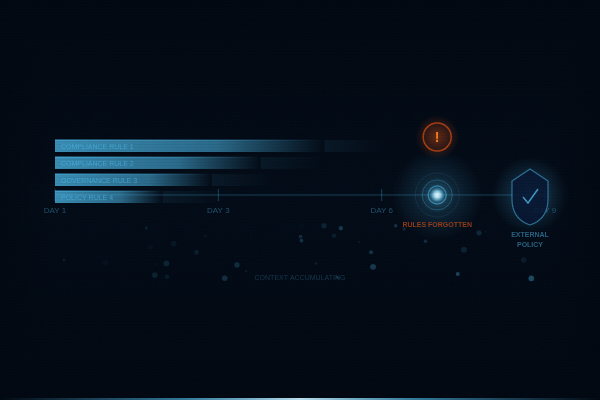
Second, build governance before the agents that require it arrive. The organizations that waited until agentic AI was in production to build governance are the ones generating the rollbacks, the audits, and the incidents. Governance built proactively, before deployment scale makes it urgent, produces both better compliance outcomes and better performance outcomes. Starting the governance design work in 2026 for the autonomous decision-making scenarios of 2029 and 2031 is not premature. It is exactly the right sequencing.
Third, redesign workflows for human-AI collaboration rather than retrofitting AI into existing human workflows. Deloitte's research is direct on this point: organizations need to redesign work holistically rather than layering AI onto legacy processes. The executive functions that AI agents will perform in five years are not the same as the executive functions that exist today. Building toward that future requires designing for it, not adapting to it after the fact.
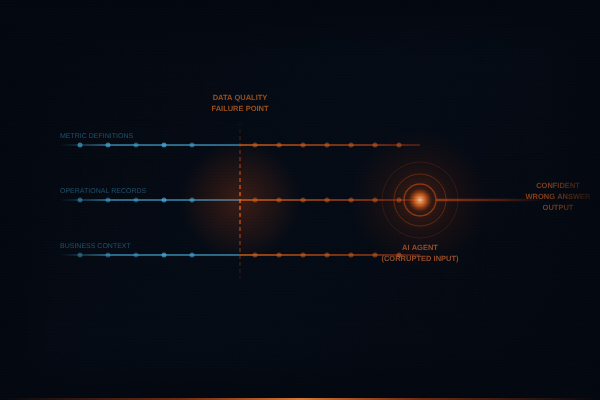
Fourth, build the data infrastructure that makes autonomous decision-making reliable. Every governance framework and every agentic deployment ultimately depends on the quality, consistency, and accessibility of the underlying data. AI agents operating at the executive level will be making decisions based on enterprise data that flows through systems built over decades. The accuracy of those decisions is a function of data quality. Organizations that have not addressed their data infrastructure cannot govern agentic systems effectively regardless of how mature their governance frameworks are.
The five-year timeline that 75% of executives are projecting is ambitious. The organizations that make it real rather than aspirational are the ones doing the foundational work right now. That is the difference between the 20% that are capturing 74% of AI's economic value and the 80% that are not. The window to join the right side of that divide is open. It will not stay open indefinitely.
This is the work KAIDATA is built to support: building the data infrastructure, governance frameworks, and organizational design that makes autonomous AI capability durable rather than experimental. The C-suite of 2031 starts with the decisions being made in 2026.