The Divide Is Real and It Is Widening
Most organizations investing in AI believe they are in the game. They have pilots running, tools deployed, and budget allocated. According to PwC's 2026 AI Performance Study, released April 13 and based on interviews with 1,217 senior executives across 25 sectors and multiple regions, most of them are wrong about where they stand.
The study's headline finding is precise: 74% of AI's economic value is being captured by just 20% of organizations. The remaining 80% of companies are sharing the other 26%. This is not a gap between companies that have adopted AI and companies that have not. The majority of organizations in PwC's research are using AI. They are running pilots, deploying tools, producing reports, and tracking activity. The divide is not between users and non-users. It is between organizations that are converting AI investment into measurable financial returns and organizations that are not.
PwC Global Chairman Mohamed Kande framed the dynamic at Davos earlier this year: "2026 is shaping up as a decisive year for AI. A small group of companies are already turning AI into measurable financial returns, while many others are still struggling to move beyond pilots." The April performance study is the quantitative confirmation of that observation. The performance difference between the top 20% and the average competitor is not marginal. The leading companies are generating 7.2 times more AI-driven revenue and efficiency gains than the average. That is not a competitive edge. That is a structural separation.
What the Leaders Are Actually Doing Differently
The most important finding in PwC's research is what it is not. The divide is not primarily driven by how much AI leading companies deploy. It is not about having access to better models, larger budgets, or more technical staff. The separation is about what these organizations point AI at and how they have built the foundation that makes AI scalable.
The top-performing companies in PwC's study are using AI as a catalyst for growth and business model reinvention rather than as a productivity tool. The majority of organizations still deploying AI are focused on cost reduction: automating existing processes, reducing headcount in specific functions, and incrementally improving operational efficiency. These are legitimate applications, but PwC's research identifies industry convergence as the single strongest factor influencing AI-driven financial performance, ahead of governance, talent, or technical infrastructure. Leading organizations are using AI to expand beyond traditional sector boundaries, pursue new revenue opportunities, and fundamentally change what their business is capable of offering.
This distinction matters for how AI strategy gets framed at the executive level. Cost reduction is a finite opportunity. Once the inefficiencies are automated, the returns plateau. Growth, by contrast, compounds. Organizations that have framed their AI strategy primarily around cutting costs are operating in a lower-return category than organizations that have framed it around creating new value.
Governance and Trust as Competitive Infrastructure
One of the more counterintuitive findings in PwC's study is how strongly governance correlates with AI performance. Leading companies are 1.7 times more likely than others to have a formal responsible AI framework and 1.5 times more likely to have a cross-functional AI governance board. These are not compliance measures. They are performance infrastructure.
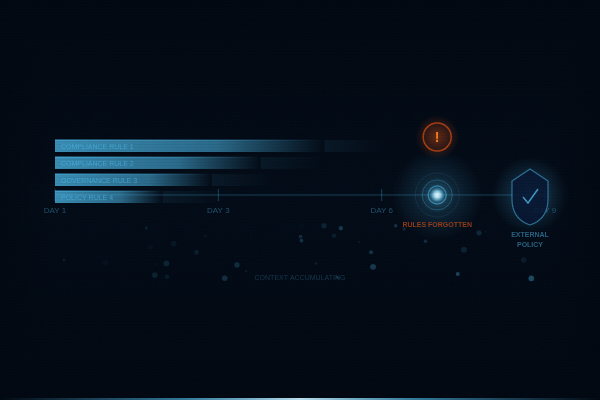
The mechanism is straightforward. AI leaders are increasing the number of decisions made without human intervention at nearly three times the rate of their peers. That level of autonomous decision-making is only achievable when the organization trusts the AI outputs enough to act on them at scale. That trust is built through governance: structured frameworks that define how AI decisions are made, how errors are identified and corrected, how accountability is assigned, and how the system is monitored in production. Without governance, autonomous AI execution is a liability. With it, it is a compounding advantage.
The payoff is measurable: employees at leading companies are twice as likely to trust AI outputs than employees at organizations without strong governance. That trust creates a virtuous cycle. Trusted AI gets used more broadly, more consistently, and more ambitiously. The returns compound as a result.
Why Most Organizations Are Stuck in Pilot Mode
PwC's research identifies a consistent pattern it describes as pilot mode: organizations where AI initiatives exist, activity is visible, reports are produced, and tools are deployed, but measurable financial returns do not materialize. The reasons for this trap are specific, and they map to the same structural gaps that have appeared consistently across enterprise AI research in 2025 and 2026.
The first is that most AI deployment is concentrated in activity rather than outcomes. Organizations track how many pilots they are running, how many employees are using AI tools, and how many use cases have been launched. None of these metrics measure financial performance. When the measurement framework does not connect AI activity to business outcomes, organizations lose the ability to distinguish investments that are working from investments that are generating activity without value.
The second is that most organizations are still treating AI as a series of point solutions rather than a platform capability. OpenAI's Chief Revenue Officer noted this week that enterprise customers are consistently telling her they are "tired of AI point solutions that don't talk to each other and just create chaos." PwC's research reinforces this. The leading companies are building integrated AI capabilities that operate across functions and data systems. The majority are managing a fragmented portfolio of tools that each solve a narrow problem and collectively fail to produce enterprise-scale returns.
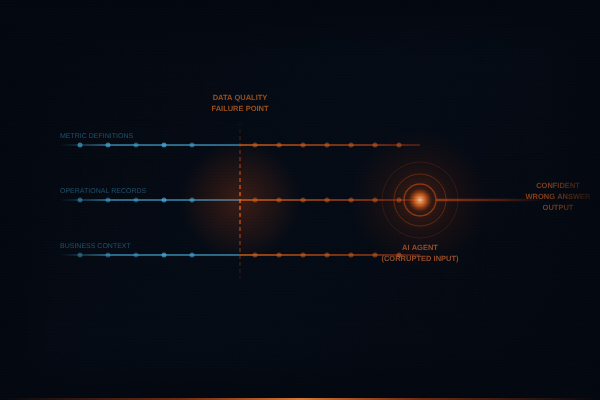
The third reason is a failure to build what PwC calls the AI foundations: the data infrastructure, governance frameworks, talent capabilities, and organizational design that determine whether AI can scale beyond individual pilots. PwC's study analyzed 60 AI management and investment practices and grouped them into two categories: AI use and AI foundations. The gap between leaders and laggards is larger in foundations than in use. Leading organizations are not simply deploying more AI. They have built the infrastructure that makes deployment at scale possible and sustainable.
The Stanford Adoption Curve Context
PwC's findings land in the context of a broader signal from Stanford's 2026 AI Index, published earlier this month, which found that enterprise AI adoption has now surpassed the PC and the internet at the same stage of development. The pace of adoption is faster than any prior general-purpose technology. The implication for organizations that have not yet built the foundations for scale is that the window between the current moment and a materially disadvantaged competitive position is shorter than most senior leaders are accounting for.
The organizations that moved early on internet infrastructure in the late 1990s and early 2000s did not simply capture early returns. They built capabilities, data assets, and organizational muscles that compounded for decades. The 74/20 split in PwC's research is the early signal that the same dynamic is playing out in AI, at a faster pace.
The Five Practices That Separate the Top 20%
PwC's analysis of 60 AI management and investment practices across the study's sample produces a clear picture of what differentiates the leading organizations. Five practices appear consistently at the top of the performance distribution.
The first is orienting AI strategy around growth rather than cost reduction. This does not mean ignoring efficiency. It means ensuring that the AI investment portfolio includes meaningful allocation toward revenue creation and business model expansion, not just process automation.
The second is building data and governance foundations before scaling use cases. Leading organizations invest in the infrastructure that makes AI reliable before they invest heavily in the applications that depend on it. This sequence is the opposite of how most organizations approach AI deployment, which is why most organizations end up with point solutions that cannot scale.
The third is deploying AI at the level of workflows rather than tasks. The highest-value AI applications in PwC's research are not narrow task automation tools. They are systems that operate across multi-step workflows, make decisions within defined parameters, and connect across functions. This level of deployment requires integration work, governance design, and organizational change that task-level tools do not.
The fourth is building cross-functional accountability for AI outcomes. Leading organizations do not manage AI as a technology function. They manage it as a business transformation with executive ownership, shared metrics across functions, and performance accountability tied to financial outcomes rather than deployment activity.
The fifth is establishing trust at scale through formal governance frameworks. The correlation between governance maturity and AI performance in PwC's data is among the strongest findings in the study. Organizations that treat governance as a compliance requirement build it too late and too narrowly. Organizations that treat it as competitive infrastructure build it early and comprehensively, and then reap the compounding returns that autonomous, trusted AI execution produces.
The Window Is Closing
PwC's language throughout the study is consistent on one point: the divide between AI leaders and laggards is likely to grow as leading organizations continue to learn faster, scale proven use cases, and automate more decisions safely. The advantage compounds because the data, the organizational capability, and the trust infrastructure that leaders are building today become harder to replicate as time passes.
For C-suite leaders looking at PwC's 74/20 finding, the relevant question is not which category their organization currently occupies. The relevant question is what it would take to move from the 80% to the 20%, and what it is costing every quarter to remain where they are.
The answer to the first question is consistent across PwC's research and across the broader body of enterprise AI evidence in 2026: it requires building the AI foundations that most organizations have been deferring. Clean data infrastructure, governance frameworks, cross-functional accountability, and a strategic orientation toward growth rather than cost reduction. These are not exotic capabilities. They are the prerequisite conditions that determine whether the AI investment an organization is already making produces enterprise-scale returns or remains confined to the pilot stage indefinitely.
The organizations that close this gap in 2026 will find themselves on the right side of a divide that, based on PwC's data, is already stark and only moving in one direction.