The Divergence Is Happening Right Now
In 2026, global AI infrastructure investment approached $400 billion annually, yet enterprise AI revenue remained capped at approximately $100 billion. That gap between investment and realized revenue is the defining economic tension of the current AI moment, and it is producing a market split that every enterprise leader needs to understand.
On one side of the split are the organizations and vendors winning with AI right now. Snowflake's stock jumped 36% on Thursday in its best single day on record, driven by what the company described as the "strongest sequential product revenue dollar growth" in its history, fueled entirely by enterprise AI demand. Snowflake announced a new multiyear $6 billion agreement with AWS aimed at accelerating global enterprise AI adoption. Anthropic reported a $30 billion annualized revenue run rate. NVIDIA reported $215.9 billion in FY2026 revenue. The companies providing real AI infrastructure and capability to enterprises that have built the foundation to use it are generating extraordinary results.
On the other side are the organizations still running pilots without production paths, the vendors selling AI features that do not connect to business outcomes, and the enterprises that invested heavily in the promise of AI without building the data, governance, and organizational infrastructure required to deliver on it. Only 15% of AI decision-makers reported an EBITDA lift for their organization in the past 12 months, and fewer than one-third can tie the value of AI to P&L changes.
Both of these things are true simultaneously. AI is producing extraordinary returns for a specific group of organizations. It is producing close to zero measurable returns for a much larger group. The market is bifurcating, and the gap between those two groups is widening rather than closing.
What the Bifurcation Actually Looks Like
Inside most enterprises, the reality is more measured than the headlines suggest. Boards are asking how AI initiatives connect to customer value, cost structure, risk, and durable revenue. Executive teams are being pushed to show measurable outcomes, not just pilots, prototypes, or proofs of concept. A small group of organizations is beginning to translate AI experimentation into real operational impact. Many others remain in pilot mode, navigating integration challenges, governance questions, and organizational readiness.
That description from a March 2026 analysis captures the bifurcation precisely. It is not a split between organizations that have AI and organizations that do not. It is a split between organizations that have converted AI investment into measurable business outcomes and organizations that have not.
MIT research showed 95% of enterprises getting zero return on their generative AI investments. PwC's 2026 AI Performance Study found that 74% of AI's economic value is being captured by just 20% of organizations. The two data points tell the same story from different angles: AI value is highly concentrated in a small group of organizations that got the fundamentals right, while the majority of AI investment is producing negligible returns.
We are moving past the phase of pure hype and into the era of practical implementation and its accompanying challenges. That transition is separating organizations that built for implementation from those that built for the hype cycle, and the separation is becoming increasingly visible in financial results.
The Infrastructure Winners vs. The Application Struggles
The current market environment is characterized by a brutal reappraisal of how artificial intelligence actually generates value. While enterprise software companies are struggling to prove that agentic AI can offset the collapse of their traditional per-user licensing models, the companies providing the chips and infrastructure required to process AI are seeing their order books stretch into the next decade.
This infrastructure-versus-application divergence is one of the clearest signals in the current market. The companies winning are the ones providing the foundational layer: compute, data infrastructure, and the platforms that connect AI capability to enterprise data in production. Snowflake's quarter was so strong precisely because enterprise customers are discovering that the data infrastructure layer is where AI actually runs, and without it, the models have nothing reliable to work with.
This is not a coincidence. It reflects the same pattern that the most rigorous enterprise AI research has been pointing to throughout 2025 and 2026: organizations that invested in data infrastructure before model deployment are seeing returns. Organizations that deployed models without building data infrastructure are not.
Is This an AI Bubble?
The bubble question is the most discussed topic in enterprise AI right now, and the honest answer is that it depends on which part of the market you are looking at.
The AI boom, while marked by elevated valuations, diverges sharply from the dot-com era. Unlike the dot-com era, where overvaluation was tied to nonexistent earnings, today's risks stem from overbuilding capacity for uncertain future demand. The companies with the most inflated valuations relative to current revenue are not the infrastructure providers generating real results. They are the application layer startups betting that enterprise demand will catch up to their current valuations.
A 2025 survey found that 54% of fund managers view AI stocks as bubbly, yet transformative potential maintains market optimism. That tension captures the market's current state precisely. There is genuine transformative value being created. There is also genuine speculative excess layered on top of it, and the two are not always easy to distinguish from the outside.
Forrester's prediction framework offers a useful organizing principle: every bubble inevitably bursts, and in 2026, AI will inevitably lose its sheen, trading its tiara for a hard hat. Enterprise ROI concerns will exceed the tensile strength of vendor hyperbole. In the face of this market correction, enterprises will prioritize function over flair. Enterprises will delay 25% of AI spend into 2027.
The organizations that will navigate this transition successfully are not the ones that avoid AI out of bubble concerns. They are the ones that invest in the parts of AI that are grounded in real enterprise value: data infrastructure, governance, workflow redesign, and the organizational capability to operate AI reliably in production. Those investments produce returns regardless of what happens to AI valuations in the capital markets.
What the Winning Organizations Have in Common
The bifurcation between AI winners and laggards is not random. The organizations on the right side of it share a specific set of characteristics that the research points to consistently.
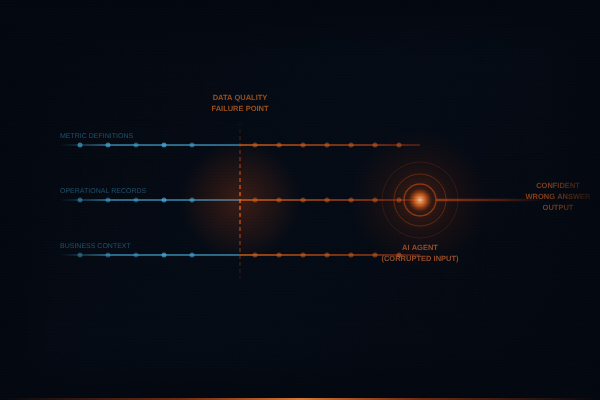
They built data infrastructure before they deployed models. The Snowflake result is the most recent confirmation of a pattern that has been visible throughout 2026: the organizations generating the strongest AI returns are the ones where data is clean, accessible, and governed. AI models are only as good as the data they operate on. Organizations that skipped the data infrastructure work are the ones generating the 95% zero-return result.
They measure AI against business outcomes rather than deployment activity. The difference between the 15% with measurable EBITDA lift and the 85% without is largely a measurement problem before it is a technology problem. Organizations that define what AI ROI looks like, track it against specific business metrics, and review it at the leadership level are the ones finding it. Organizations that track how many pilots they launched are not.
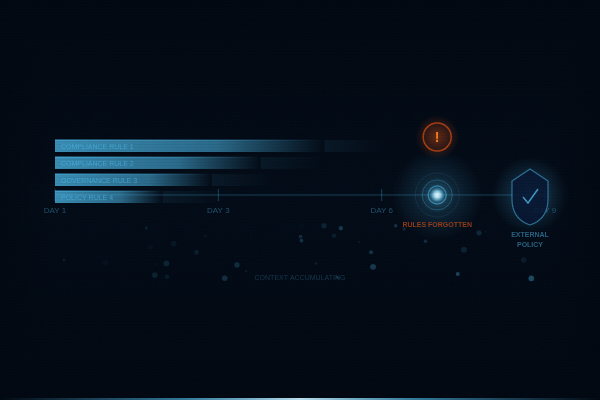
They treat governance as a performance requirement rather than a compliance task. The PwC finding that organizations leading on governance are 1.7 times more likely to have strong AI performance is one of the most consistent findings in 2026 research. Governance frameworks that determine how AI decisions are made, who is accountable, and how errors are identified and corrected are not overhead. They are the infrastructure that makes AI reliable enough to generate the kind of returns that appear on the P&L.
They deploy at the workflow level rather than the task level. The highest-value AI deployments are not narrow task automation tools. They are systems designed around complete workflows, connecting AI capability to the full sequence of steps that produce a business outcome. That level of deployment requires integration work, governance design, and organizational change that task-level tools do not. It also produces compounding returns that task-level tools cannot.
What This Means for Enterprise Leaders Right Now
The goal for 2026 and beyond is not to avoid AI for fear of a bubble, but to engage with it clear-eyed. Focus on its substantive utility, understand its very real limitations, and build with a focus on solving human and business problems. The future belongs not to those who blindly believe the hype, but to those who thoughtfully harness reality.
That framing is the most useful one available for enterprise leaders evaluating their AI strategy in the current moment. The bifurcation is not a reason to pause AI investment. It is a reason to redirect AI investment toward the things that are generating returns and away from the things that are generating activity.
The organizations that will be best positioned at the end of 2026 are the ones that use the current market correction to do the foundational work that generates durable returns: cleaning and governing their data, connecting AI to specific business outcomes, building accountability structures that make AI investment visible on the P&L, and deploying at the workflow level rather than running disconnected pilots.
That is not a new conclusion. It is the same conclusion that the most rigorous enterprise AI research has pointed to for 18 months. The difference in May 2026 is that the market is now pricing the gap between organizations that did the work and organizations that did not. Snowflake's 36% jump on enterprise AI demand and the ongoing struggles of organizations still searching for their first measurable return are two sides of the same bifurcation.
The question for every enterprise leader is straightforward: which side is your organization on, and what would it take to move if you are not where you want to be?
That is the conversation KAIDATA exists to have. Helping organizations build the data foundation, governance infrastructure, and strategic clarity that puts them on the right side of the bifurcation before the gap becomes too wide to close. The organizations generating the returns are doing specific things differently. Those things are learnable, buildable, and available to any organization willing to do the work rather than the hype.