Public discussion around artificial intelligence often centers on job loss. Headlines focus on layoffs, workforce reductions, and roles being automated. While these developments are real, they obscure a more important reality. Artificial intelligence is not primarily eliminating jobs. It is exposing businesses that are structurally unprepared for change.
Recent layoffs attributed to AI adoption reveal a deeper shift in how organizations operate. Companies are discovering that long-standing processes, decision structures, and operating models no longer align with an AI-enabled environment. Those that fail to adapt are experiencing disruption faster and more visibly than those that prepare.
According to the World Economic Forum’s Future of Jobs Report, nearly half of all core skills are expected to change within the next few years as AI and automation reshape work. The report emphasizes that organizational transformation, not technology alone, will determine which companies succeed during this transition.
The Real Impact of AI Is Structural, Not Tactical
Artificial intelligence does not enter an organization as a single tool or isolated capability. It alters how work flows, how decisions are made, and how value is created. Tasks that once required manual coordination can now be automated or augmented. Analytical work that took days can be completed in minutes. Operational decisions can be supported continuously rather than periodically.
McKinsey research shows that companies achieving the greatest value from AI are those that redesign workflows alongside AI deployment. Organizations that simply layer AI on top of existing structures often see limited returns and increased operational complexity. This finding helps explain why AI adoption frequently leads to organizational restructuring rather than incremental improvement.
When AI reveals inefficiencies such as redundant approvals, inconsistent data, or unclear ownership, businesses are forced to confront issues that were previously tolerated. In many cases, workforce changes follow not because AI replaces people outright, but because existing roles no longer align with redesigned processes.
Why Some Businesses Adapt While Others Fall Behind
The ability to adapt to AI is rarely determined by access to technology. Most AI tools are widely available. The differentiator is readiness.
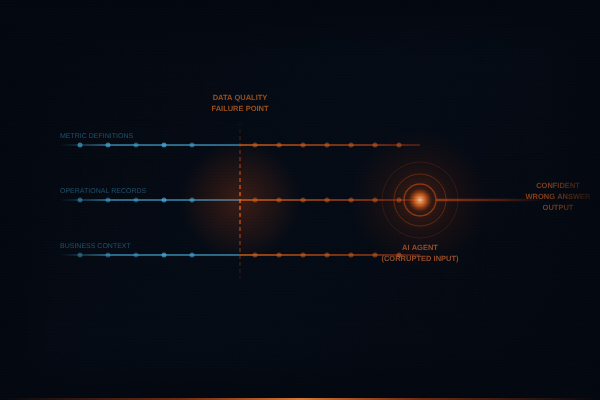
Harvard Business Review has consistently found that organizational barriers are the leading cause of AI failure. In studies examining stalled AI initiatives, the most common issues include poor data quality, lack of clear strategy, and misalignment between leadership and operational teams. Technical limitations rank far lower.
Prepared organizations tend to share several characteristics. They have clearly defined processes, reliable data foundations, and leadership alignment around decision making. They understand where AI adds value and where human judgment remains essential. As a result, AI adoption enhances performance rather than introducing chaos.
Unprepared organizations often pursue AI reactively. Tools are adopted without governance, pilots lack ownership, and efficiency gains are prioritized without understanding long term implications. Over time, these missteps compound and erode trust in AI initiatives.
AI Readiness Is Becoming a Competitive Advantage
AI readiness is emerging as a measurable source of competitive advantage. Gartner reports that organizations that operationalize AI responsibly outperform peers in decision speed, cost efficiency, and scalability. These benefits accumulate over time, creating structural advantages that are difficult to replicate.
Conversely, businesses that delay preparation face increasing pressure as competitors leverage AI to improve margins and responsiveness. PwC estimates that AI could contribute trillions of dollars to global economic output over the next decade, but only organizations that integrate AI into core strategy will capture meaningful value.
As this gap widens, late adopters struggle to compete on cost, speed, and insight. The challenge is not catching up technologically. It is catching up structurally.
The Cost of Delaying AI Strategy
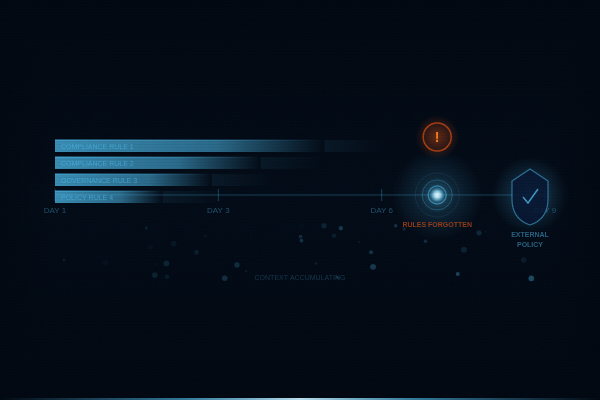
Organizations that postpone planning often adopt AI under pressure, driven by competitive threats or cost concerns. This reactive approach leads to rushed decisions, fragmented deployments, and overlooked governance risks. According to PwC, companies that implement AI without strategic alignment are more likely to encounter security, compliance, and data governance issues.
A deliberate strategy allows organizations to control the scope and pace of AI adoption. It enables thoughtful prioritization of use cases, clearer accountability, and better integration with existing operations. Reactive adoption removes that control.
What Prepared Businesses Do Differently
Prepared businesses treat AI as a long term capability rather than a short term efficiency lever. They begin by assessing data readiness, operational maturity, and decision structures. They identify high impact use cases aligned with business objectives and establish governance frameworks before scaling adoption.
They also address workforce implications directly. The World Economic Forum emphasizes that successful AI adoption requires reskilling and role evolution, not simple workforce reduction. Employees who understand how AI supports their work are more likely to contribute to its success.
Many organizations recognize that this level of transformation requires external expertise. AI adoption intersects strategy, operations, data, and risk. Working with experienced advisors helps businesses avoid common pitfalls and align AI initiatives with long term goals.
Conclusion
Artificial intelligence is not eliminating businesses overnight. It is steadily rewarding those that prepare and penalizing those that do not.
The organizations struggling today are not failing because they adopted AI. They are struggling because they lacked the readiness to integrate it effectively. As AI continues to reshape how work is structured and decisions are made, preparedness will determine long term competitiveness.
Business leaders who invest in AI readiness now retain flexibility, control, and strategic advantage. Those who delay risk falling behind in ways that become increasingly difficult to reverse.
The question is no longer whether AI will affect your business. The question is whether your organization is prepared for it.