The Tool That Outlasted Its Purpose
Spreadsheets were not built to run a business. They were built to help individuals organize information. Somewhere along the way, they became the default infrastructure for financial reporting, operational planning, and executive decision-making at organizations of every size. That gap between what the tool was designed for and how it is being used is where a significant amount of business value quietly disappears.
A 2024 study led by Professor Pak-Lok Poon, reviewing 35 years of spreadsheet research, found that approximately 94% of business spreadsheets used in decision-making contain errors, ranging from minor formatting issues to material defects that affect results. A separate analysis found that more than 50% of spreadsheet models used by mid-sized and large businesses contain faults significant enough to alter outcomes. These are not anomalies. They are the statistical baseline for a reporting infrastructure that most organizations have never formally audited.
The consequences of this show up across industries. In the first ten months of 2024, 140 public companies issued financial restatements after telling investors their previous figures were unreliable, according to Ideagen Audit Analytics. That was a sharp increase from 122 the prior year and more than double the figure from four years earlier. Many of these restatements trace back to spreadsheet errors that went undetected through multiple review cycles. The tool was not flagging the problem. It was obscuring it.
For C-suite leaders, this is not primarily a technology conversation. It is a risk and strategy conversation. The question is not whether your team knows how to use Excel. It is whether the data your organization runs on is accurate, timely, and fit to support the decisions you are making.
What Manual Reporting Is Actually Costing You
The direct costs of manual reporting are measurable, and most organizations are underestimating them significantly.
Research from AutoRek's 2025 annual payments survey found that 90% of organizations are still relying on spreadsheets for at least some of their most critical financial data. That same survey identified this reliance as the primary driver of the bottlenecks, escalating costs, and compliance exposure those organizations are experiencing. Separately, Rossum's Document Automation Trends 2025 report, which surveyed more than 470 finance leaders across the US, UK, and Germany, found that 58% of finance teams still use spreadsheets as their primary automation tool. An additional 26% report using no automation tools at all.
The time cost compounds quickly at scale. Employees working in manual reporting environments estimate losing roughly 240 hours per year to repetitive data entry tasks. Business leaders put that figure even higher, at around 360 hours annually. That is up to nine full work weeks per employee spent moving numbers from one place to another rather than analyzing them.
The Decision Latency Problem
Beyond the direct cost of labor is the cost of decision latency, and this is where the gap between manual reporting organizations and data-mature ones becomes a genuine competitive liability.
According to Gartner's 2025 research, organizations using modern business intelligence platforms make decisions five times faster than those relying on spreadsheets alone. That speed differential does not just affect internal efficiency. It affects how quickly your organization can respond to a pricing shift from a competitor, a disruption in the supply chain, a change in customer behavior, or an opportunity in the market. When your reporting cycle runs on weekly or monthly cadences built around manual compilation, you are structurally limited in how fast you can move. By the time the report is built, reviewed, and distributed, the conditions it reflects may no longer be current.
McKinsey's research found that data-driven organizations are 23 times more likely to outperform competitors in customer acquisition. Deloitte's research found that CEOs making data-driven decisions are 77% more likely to succeed. These figures are not arguments for technology investment on their own terms. They are arguments for building the reporting infrastructure that makes data-driven decisions possible in the first place.
The Warning Signs You Have Outgrown Manual Reporting
Most organizations do not make a conscious decision to stay on manual reporting. They simply never make a decision to leave it. These are the most common signals that the cost of staying has become greater than the cost of changing.
Your Team Spends More Time Building Reports Than Reading Them
When your finance team, operations team, or business unit leaders spend the majority of their reporting time gathering, cleaning, and assembling data rather than analyzing it, your reporting infrastructure is working against you. The purpose of a report is to produce an insight. If the production process consumes more capacity than the insight-generation, the tool is misaligned with the goal.
Executives Are Working Off Different Numbers
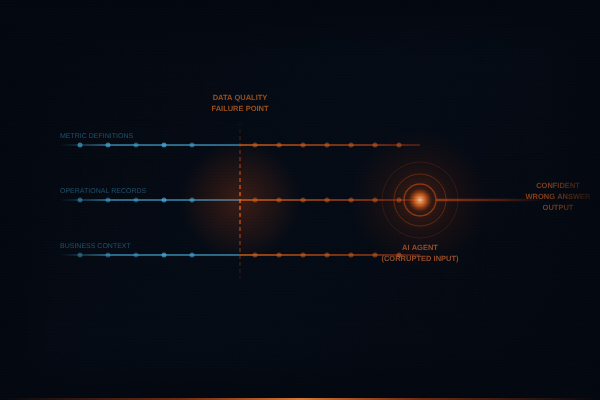
One of the clearest indicators that manual reporting has exceeded its useful life is when leaders in the same organization are looking at different figures for the same metric. This happens when data lives in multiple disconnected spreadsheets, when version control is managed informally, and when there is no single source of truth. According to Gartner, 64% of organizations cite data quality as their top data integrity challenge. In manual reporting environments, that challenge is structural rather than incidental. It does not get resolved through better effort. It gets resolved through better infrastructure.
Reporting Cycles Are Blocking Strategic Decisions
If your executive team is waiting on a monthly close to make resource allocation decisions, or if your board materials require two weeks of manual preparation, your reporting cadence is governing your strategy rather than supporting it. Modern BI platforms reduce manual reporting time by 60 to 80%, according to 2025 research from SR Analytics, and financial institutions implementing automated reporting have documented savings of 120 or more hours per month. That time does not disappear. It gets redirected toward the analysis and judgment that leadership should actually be doing.
You Cannot Answer Basic Questions Without a Custom Request
A mature data environment allows business leaders to get answers to operational questions without routing a request through a data team or waiting for the next reporting cycle. If your organization cannot answer questions like "what is our current gross margin by product line" or "which customer segments are trending down this quarter" without significant manual effort, your reporting architecture is limiting your strategic visibility.
What a Data Strategy Actually Looks Like
Moving off manual reporting does not mean implementing a suite of expensive tools and hoping the transformation happens on its own. The organizations that successfully make this shift treat it as a strategic initiative with clear objectives, phased execution, and executive ownership.
The foundation is data integrity. Before any platform can deliver reliable insights, the underlying data needs to be clean, consistently defined, and governed. Gartner has consistently found that poor data quality is one of the primary reasons BI initiatives fail to deliver ROI. Organizations that invest in data governance before they invest in visualization and dashboarding produce better outcomes than those that try to build the front end before stabilizing the foundation.
The second component is alignment on what decisions the data is meant to support. A common failure mode in BI projects is building infrastructure without a clear connection to the strategic questions that leadership needs answered. When reporting is designed around specific decisions, from pricing to workforce planning to customer retention, it remains useful. When it is designed around what data is available rather than what decisions require, it produces dashboards that look impressive but do not change how the business operates.
The third component is organizational adoption. According to McKinsey, organizations with strong change management in technology initiatives are six times more likely to meet their project objectives. The tools matter far less than whether people use them. That means training, role-appropriate access, and a clear articulation of how data-informed decision-making fits into the organization's operating rhythm.
Done well, the shift from manual reporting to a data strategy is not an IT project. It is a business transformation with measurable outcomes: faster decisions, fewer errors, clearer visibility into performance, and an executive team that can focus on strategy rather than on reconciling conflicting spreadsheets.
The Competitive Reality in 2025
The global business intelligence market reached $47.48 billion in 2025 and is projected to grow to over $151 billion by 2034, according to Precedence Research. That growth reflects the pace at which organizations are recognizing that reporting infrastructure is a strategic asset, not an administrative function.
More than 78% of global enterprises have now implemented at least one BI or analytics platform, according to InsightMark Research. 84% of executives say BI and analytics are critical to their digital transformation roadmap. The organizations that have not yet made this shift are not holding a neutral position. They are falling behind a competitive baseline that is actively rising.
For C-suite leaders, the relevant question is not whether modern reporting tools exist or whether they are accessible. They do and they are, at entry-level costs that make this feasible for organizations well below enterprise scale. The relevant question is whether your current reporting infrastructure is giving your leadership team the visibility and speed they need to make the decisions your business requires.
If the answer is no, the next question is straightforward: what would it take to change that, and what is it costing you to wait?