The Numbers Are Not Abstract Anymore
Between January and April 2026, 78,557 workers in the tech industry were laid off, with more than 76% of the affected positions located in the U.S. Nearly half of those cuts, approximately 47.9%, were attributed to AI-driven automation. This is not a prediction. It is a Q1 earnings report.
Oracle eliminated approximately 30,000 positions as part of an aggressive pivot to AI-first cloud infrastructure. Atlassian cut 1,600 employees — 10% of its workforce — citing AI-driven organizational restructuring. Dell reduced headcount by roughly 11,000. Amazon confirmed roughly 16,000 corporate cuts, hitting AWS and technical roles hardest. These are not struggling companies. They are some of the most profitable technology businesses in the world, and they are restructuring around AI because the economics now make it necessary, not optional.
In Q1 2026, 63% of tech layoffs explicitly cited AI as a factor, up from 38% in 2025 and just 12% in 2024. That acceleration is the data point every executive outside of tech needs to internalize. The pattern is not confined to Silicon Valley. 72% of enterprises have at least one AI workload in production as of Q1 2026, up from 55% in 2024. But only 28% describe their AI adoption as mature. The gap between what organizations are deploying and what they are structurally ready for is the defining tension of 2026, and the companies resolving it fastest are not waiting for their industry to force the question.
What Is Actually Driving the Cuts
The honest picture is more nuanced than the headlines suggest, and understanding the distinction matters enormously for how leaders respond.
A survey found that 59% of hiring managers admitted their companies frame workforce reductions as AI-driven in part to appeal to stakeholders, even when automation played a minimal role in the decision. OpenAI CEO Sam Altman acknowledged at the India AI Impact Summit that "there's some AI washing where people are blaming AI for layoffs that they would otherwise do." Cost discipline, a decade of over-hiring during cheap capital conditions, and post-pandemic recalibration are all contributing factors that are being bundled under the AI umbrella by communications teams across the industry.
That caveat matters. But it does not change the underlying dynamic that is real and measurable. The displacement is genuine in content operations, basic customer support, and junior coding work — the roles that were always going to feel pressure first. AI is bifurcating the labor market, creating premium demand for senior engineers while structurally displacing junior and middle-skill roles. At Oracle, the positions affected were concentrated in legacy enterprise software maintenance, traditional database administration, and support roles that Oracle's own AI-assisted tools now handle automatically. At Atlassian, the company simultaneously replaced its Chief Technology Officer with two new AI-focused co-CTOs.
This is the template that has emerged across Q1 2026: layoffs in legacy divisions funding AI expansion. The capital being freed from headcount reduction is not disappearing. It is being reallocated into AI infrastructure, tooling, and the smaller, more technically specialized teams needed to operate at the next tier of automation. For business leaders watching this pattern from adjacent industries, the question is not whether this dynamic is coming to your sector. It is whether you will be the organization directing that transition or the one reacting to it.
The Silent Restructuring Nobody Is Tracking
Beyond the announced layoffs sits a less visible pattern that may ultimately affect more workers. A series documented companies where headcount has declined 15 to 30% over 18 months without explicit layoffs — through attrition not replaced, contractors not renewed, and part-time positions not converted to full-time. This silent restructuring may account for more total displaced workers than the announced large-company layoffs.
This dynamic is more likely to characterize what mid-market organizations experience than the mass layoff announcements that dominate technology news coverage. As AI tools absorb specific workflows, the case for replacing a departing employee weakens. Over 12 to 18 months, teams consolidate not through announced restructuring but through decisions that never appear in a press release.
For executive teams, this is worth tracking deliberately rather than discovering retroactively. The question is not just how many roles AI will eliminate. It is whether the organizational capability is being built to absorb those workflows reliably before the decisions to reduce headcount are made, or whether the reduction happens first and the capability gaps get discovered in production.
What the Restructuring Wave Looks Like Outside of Tech
Tech layoffs tied to AI are dominating headlines. Coders are being displaced by agents. Software headcount is shrinking. The message from Silicon Valley is that AI is restructuring the workforce in real time — and that the rest of corporate America should brace for the same.
But the pace and pattern are different outside of technology. Software companies are uniquely positioned for rapid AI displacement because their workers are engineers, their outputs are verifiable code, and their tools are flexible enough to absorb the change quickly. For organizations in financial services, healthcare, professional services, and industrial sectors, the displacement curve is slower and the organizational change required is more complex.
This does not mean those industries are insulated. It means they have a window. Anthropic CEO Dario Amodei and Ford CEO Jim Farley have both stated that AI will wipe out half of entry-level white-collar jobs in the U.S. The timeline for that shift outside of tech is longer than the headlines suggest, but the direction is consistent across the research. Organizations that use this window to build the AI capability and workforce readiness infrastructure needed to manage that transition deliberately will be in a fundamentally different position than those that do not.
The Strategic Imperative for C-Suite Leaders
The restructuring wave creates three distinct strategic priorities for executive teams that have not yet been forced to move by competitive pressure.
The first is mapping your own exposure before it maps you. Understanding which roles and workflows in your organization are susceptible to AI displacement in the next 24 months is not a speculative exercise. The technology is deployed and in production in comparable organizations. Companies such as Ford, Amazon, Salesforce, and JP Morgan anticipate workforce shifts but also recognize opportunities for reskilling displaced employees. That anticipation allows for deliberate transition planning rather than reactive restructuring. Organizations that wait for the pressure to become acute before mapping their exposure are building a more expensive and more disruptive version of the same transition.
The second is distinguishing between AI-driven workforce reduction and AI-enabled workforce redesign. These are structurally different things, and the organizations handling the transition well are doing the latter. Oracle simultaneously announced 10,000 new AI engineering hires alongside its 30,000 reduction, suggesting a fundamental skills shift rather than simple downsizing. The net headcount went down, but the organizational capability went up. That distinction matters for how the transition gets framed internally, how it affects employee trust and retention of the people you most need to keep, and how it is received by the board.
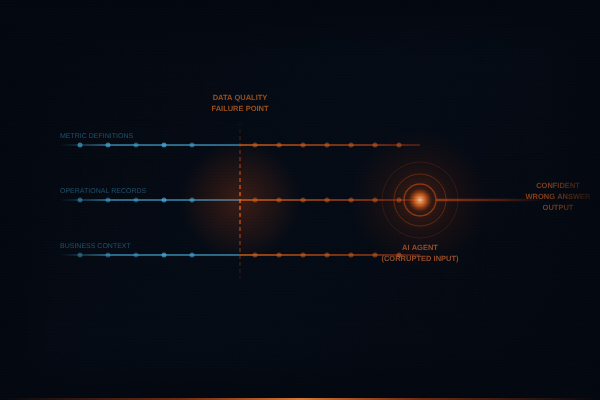
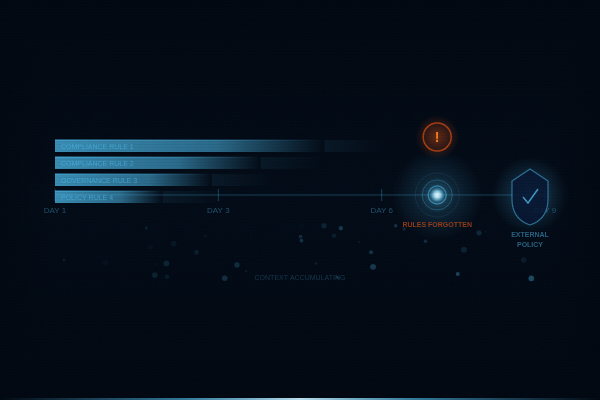
The third is building the AI foundation that makes restructuring sustainable rather than fragile. The organizations that cut headcount in advance of having reliable AI-augmented workflows in place are the ones generating the incidents, the quality failures, and the customer service breakdowns that follow layoff announcements at several of the companies in Q1's data. AI is not completely eliminating roles but restructuring them, which means the hiring pipeline is shifting to prioritize different skills rather than disappearing altogether. That redesign requires investment in data infrastructure, workflow redesign, governance, and organizational change management before the headcount decisions are made, not after.
Where KAIDATA Sits in This Conversation
The restructuring wave is not a technology event. It is an organizational design event with technology as the catalyst. The organizations navigating it most effectively are not the ones that have the most advanced AI tools. They are the ones that have built the data infrastructure, process clarity, and governance frameworks that make AI-augmented workflows reliable enough to actually replace human capacity rather than running in parallel with it indefinitely.
This is the work that is most frequently underfunded and most frequently rushed. It is also the work that determines whether an AI-driven restructuring produces the efficiency and capability gains that justified the investment, or produces the operational gaps, compliance exposures, and workforce disruption that show up in the second and third wave of consequences after the headlines have moved on.
For mid-market and enterprise organizations watching the Q1 2026 data and recognizing that the same structural forces will eventually arrive in their sector, the question is whether the foundational work gets done before or after the pressure forces it. That is exactly the conversation KAIDATA is built for. Building the AI infrastructure, workflow design, and governance foundation that makes organizational transitions durable rather than disruptive is the work we do with every client.
The restructuring wave is not a reason to panic. It is a reason to plan now, while the window is still open.