The Decision That Changes the Framework
In early 2026, JPMorgan Chase made a decision that received far less coverage than it deserved. The world's largest bank, with a 2026 technology budget of $19.8 billion and a workforce of 319,000 people, formally reclassified its AI investment from discretionary innovation to core infrastructure. In practical terms, this means AI spending now sits alongside data centers, payment systems, cybersecurity, and operational resilience in JPMorgan's budget, categories that are treated as non-negotiable baseline operating costs rather than investments evaluated against a return hurdle.
The bank has allocated roughly $2 billion specifically to AI within that $19.8 billion technology budget, representing approximately 10% of total technology spend and about 1 to 1.2% of total revenue. What makes the reclassification significant is not the number. It is the category. Moving AI from innovation budget to infrastructure budget, which is a strategic signal about how the bank understands AI's relationship to its operations going forward. Infrastructure spending does not get cut in a downturn because of unclear ROI. It does not get paused because the board wants to see better metrics. It is funded because the organization cannot function without it.
CEO Jamie Dimon has framed this positioning directly. "The importance of AI is real, and while I hesitate to use the word transformational, it is. The pace of adoption will likely be far faster than prior technological transformations, like electricity or the internet. Those took decades to roll out, but this implementation looks likely to accelerate over the next few years." For C-suite leaders in industries far removed from financial services, the JPMorgan reclassification is a roadmap for how to think about AI investment and a benchmark against which their own frameworks are likely to be measured.
What JPMorgan Has Actually Built
The case for treating JPMorgan's AI posture as a benchmark rather than an outlier starts with what the bank has actually delivered from its investment.
The bank's $2 billion annual AI investment is already self-funding, generating approximately $2 billion in operational savings annually. Software engineers are 10% more efficient. Operations staff handle 6% more accounts each. The per-unit cost to deal with fraud has fallen by 11%. The bank has deployed its internal LLM Suite to 250,000 employees, not a specialist subset but the vast majority of its workforce, with over 100,000 using it daily. One in three JPMorgan employees starts each day with an AI tool open.
Its overall AI spend represents about 1 to 1.2% of total revenue, and the bank reports approximately $2 billion in realized annual AI value, also around 1 to 1.2% of revenue, meaning AI investment is, in aggregate, already paying for itself. That self-funding dynamic is precisely what makes the infrastructure reclassification defensible. When AI investment generates returns equal to its cost and enables a compounding improvement in operational efficiency, it earns its place alongside cybersecurity in the non-discretionary category.
JPMorgan has topped the Evident AI Index, the most rigorous independent benchmark of AI maturity across global banking, for four consecutive years, scoring 79.0 against an average that trails by more than twenty points. The bank is not experimenting with AI anymore. It is operating with it.
How JPMorgan Structured the Work
JPMorgan's global CIO Lori Beer has described the bank's approach to AI agents in terms that are instructive for any organization: AI agents will change how one thinks about work, the tasks to complete that work, how to break those tasks down, the tasks the organization is comfortable automating, the tasks that require human reflection, and then the proper technology ecosystem with the proper security, resiliency, and controls.
That sequencing reflects a maturity of thinking about AI deployment that most organizations have not yet reached. The question is not which AI tool to deploy. The question is how to redesign the work itself to take advantage of what AI can reliably do, while keeping human judgment at the points where it creates the most value.
In February 2026, the bank elevated its digital head to COO of the Commercial and Investment Bank with a specific remit: redesign every business unit and process to maximize AI impact. His first priority was appointing Chief Data and Analytics Officers inside each major business line, sitting beside business heads rather than reporting to a central technology function, and rewriting operations with AI at the center. This is the blueprint for federating AI ownership without losing strategic coherence, and it is available to organizations far smaller than JPMorgan.
What the Reclassification Signals to Every Other Industry
JPMorgan's reclassification of AI as infrastructure is not a banking story. It is a signal about where the entire enterprise AI trajectory is heading, and it has direct implications for how C-suite leaders in every industry should be thinking about their own AI investment frameworks right now.
The first implication is about budget category. Most organizations still carry AI investment in innovation or R&D budgets, evaluated against return hurdles that do not apply to infrastructure spending. JPMorgan's CFO Jeremy Barnum framed the company's rising technology costs plainly: "technology remains a major driver of our expense growth." That framing is not an apology. It is an acknowledgment that AI has moved from the discretionary column to the cost-of-competition column, and the budget framework needs to reflect that reality.
The second implication is about the self-funding model. JPMorgan's AI investment produces returns approximately equal to its cost through operational efficiency gains. That self-funding dynamic is the financial architecture that justifies infrastructure classification, and it is achievable because the bank built the data foundation, governance infrastructure, and organizational deployment model required to generate those returns rather than simply deploying tools. Organizations that are funding AI as an experiment without the foundational infrastructure to generate operational returns are unlikely to reach the self-funding threshold. The sequence matters: foundation first, deployment second, scale third.
The third implication is about workforce scale. Deploying AI tools to 250,000 employees is not a technology project. Dimon confirmed the bank has "huge redeployment plans" for employees affected by AI, offering them other internal jobs, with operations and support roles declining slightly while client-facing and revenue-generating positions grew. The organizational design, change management, and workforce transition planning required to deploy AI at that scale is the invisible work that most organizations are either deferring or underestimating. JPMorgan spent years building toward that deployment before it happened.
The Infrastructure vs. Innovation Distinction Matters More Than It Sounds
Most C-suite leaders understand intellectually that AI is important. The JPMorgan reclassification represents something more operationally consequential: a formal acknowledgment that AI has moved past the point where it can be evaluated the way innovation investments are evaluated.
Innovation investments are expected to have uncertain returns, long timelines, and a high failure rate. They are funded with capital that accepts those characteristics. Infrastructure investments are expected to be reliable, maintained, and non-negotiable. They are funded because the organization cannot function without them.
When AI is carried in the innovation budget, it gets evaluated on innovation terms: pilots are acceptable, unclear ROI is expected, organizational disruption is tolerated as a cost of experimentation. When AI is reclassified as infrastructure, the accountability framework changes entirely. Returns need to be measurable. Deployment needs to be reliable. Governance needs to be operational rather than aspirational. The organization's dependency on AI needs to be managed with the same rigor applied to any other critical system.
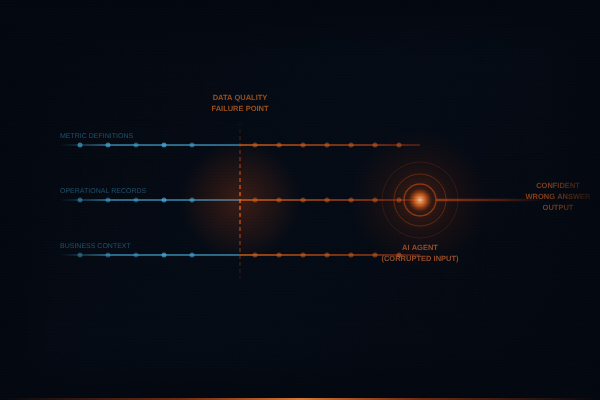
For most organizations, the question is not whether their AI investment should eventually be reclassified as infrastructure. It is whether the foundational work required to justify that reclassification: clean data, production-grade governance, reliable deployment architecture, measurable operational outcomes, has been done. JPMorgan spent years building that foundation before the reclassification made sense. Organizations that attempt to reclassify AI as infrastructure before those foundations are in place will find that the accountability framework the reclassification implies exposes gaps they are not yet equipped to close.
What This Means for Mid-Market and Enterprise Leaders Right Now
Jamie Dimon's framing of AI's pace of adoption as faster than electricity or the internet is relevant not just as a technology observation but as a competitive urgency signal. Dimon has warned that financial institutions that fail to scale AI risk losing ground to competitors, stressing that the focus is on ensuring the bank remains effective in an industry where efficiency and scale are critical. The same dynamic applies across every knowledge-intensive industry.
Bank of America has committed $14 billion in technology spending for 2026. The arms race JPMorgan is running is being replicated across financial services, and the pattern will spread to every sector where AI creates measurable operational leverage. Organizations that are still in the experimental phase of AI investment when the competitive baseline shifts to infrastructure will find themselves not behind the leaders but behind the average.
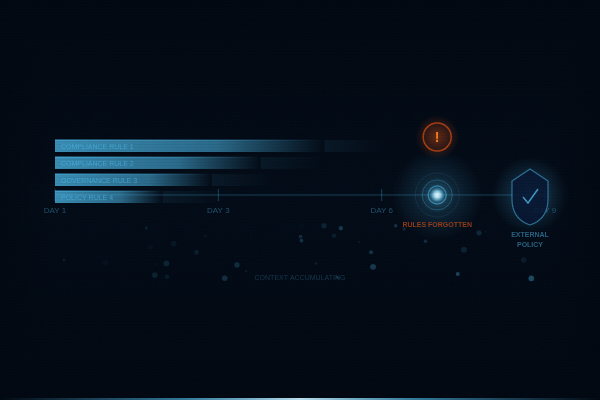
The practical lessons from JPMorgan's trajectory are specific. AI deployment at scale requires data infrastructure investment before model deployment, not alongside it. Governance frameworks need to be built before organizational dependency on AI systems grows to the point where failure is operationally consequential. AI ownership needs to sit in business lines alongside business leaders, not in a central technology function that lacks the operational context to make the right deployment decisions. And the workforce transition planning required to move people from AI-displaced roles to AI-augmented roles needs to be designed before headcount decisions are made, not after.
These are not lessons that require a $19.8 billion technology budget to apply. The three moves that define JPMorgan's advantage are executive elevation of AI ownership, data readiness investment, and business-line AI accountability, and all three are available to any organization. They are choices about how you organize, not how much you spend.
The reclassification of AI from experiment to infrastructure is coming for every industry. The organizations that are building the foundational work now, before the competitive baseline forces it, will be the ones positioned to make that reclassification on their terms rather than under pressure. That is the decision JPMorgan made years ago. The results are visible in the numbers.
This is the work KAIDATA exists to support: building the data foundation, governance infrastructure, and organizational design that makes AI investment durable rather than experimental. The JPMorgan playbook is not out of reach for organizations at any scale. But the window to build it before the competitive baseline shifts is narrowing, and the time to start is before the pressure arrives, not after.