Recent layoffs across the technology sector have made one reality increasingly clear. Artificial intelligence is no longer a future concept confined to research labs or theoretical discussions. AI is actively reshaping how companies operate, and organizations are beginning to acknowledge its impact openly.
Amazon recently announced plans to cut approximately 16,000 corporate roles as part of a broader restructuring effort focused on operational efficiency and automation. According to reporting from Reuters, these reductions are directly connected to ongoing investments in artificial intelligence systems that allow certain functions to be performed with fewer employees. Pinterest followed with its own announcement, stating it would reduce roughly 15 percent of its workforce while citing increased efficiency driven by artificial intelligence and machine learning initiatives.
While these workforce reductions have occurred within the technology sector, the forces behind them extend well beyond it. Artificial intelligence is not changing one industry in isolation. It is changing the underlying economics of work across the business landscape.
Artificial Intelligence Has Moved Into Core Business Operations
For many years, businesses approached artificial intelligence as a long term opportunity rather than an immediate operational priority. AI initiatives were often framed as pilot programs, proofs of concept, or innovation experiments with limited scope. That phase has largely passed.
Today, AI systems are embedded directly into core business operations. Organizations are using artificial intelligence to support customer service, data analysis, forecasting, scheduling, and internal reporting. These applications are no longer experimental. They are operational tools that influence productivity, cost structure, and decision making.
Research from McKinsey shows that organizations integrating AI into core workflows are already experiencing measurable productivity improvements and cost efficiencies, particularly when AI initiatives are aligned with clearly defined business objectives. McKinsey also notes that companies lacking a cohesive AI strategy often struggle to move beyond experimentation and fail to capture meaningful value.
This shift explains why businesses are now openly linking AI adoption to workforce changes. When automation becomes part of daily operations, organizations naturally reassess how work is distributed between people and technology.
AI Driven Change Is Not Limited to Technology Companies
It is a mistake to view AI related layoffs as a problem confined to the technology industry. Every organization relies on repeatable processes, structured data, and human decision making. These are precisely the areas where artificial intelligence delivers the strongest impact.
Gartner reports that adaptive AI systems are increasingly being used to augment or replace traditional decision making processes across industries. Manufacturing organizations apply AI to supply chain optimization and predictive maintenance. Financial services firms use artificial intelligence for risk analysis, fraud detection, and regulatory compliance. Healthcare organizations rely on AI to streamline administrative workflows and support clinical decision making. Retail companies use AI to forecast demand, manage inventory, and personalize customer experiences.
The common thread across these examples is not industry. It is process. Any business built on repeatable workflows is exposed to the effects of artificial intelligence.
The Risk of Waiting Too Long to Develop an AI Strategy
Many business leaders continue to assume that artificial intelligence adoption can be addressed later, once tools mature or competitive pressure becomes unavoidable. This assumption carries significant risk.
Research published by Harvard Business Review shows that while most organizations recognize AI as a strategic priority, only a small percentage believe they are fully prepared to deploy it effectively. Data readiness, governance, and organizational alignment remain major barriers to success. Companies that delay addressing these foundational issues often find themselves reacting under pressure rather than acting with intention.
As competitors adopt AI to reduce costs, improve speed, and enhance decision quality, late adopters face a widening competitive gap. Over time, this gap becomes increasingly difficult to close, especially when AI driven efficiencies are reinvested into further innovation and automation.
AI Readiness Matters More Than Technology Tools
The central challenge facing businesses is not the presence of artificial intelligence itself. It is readiness.
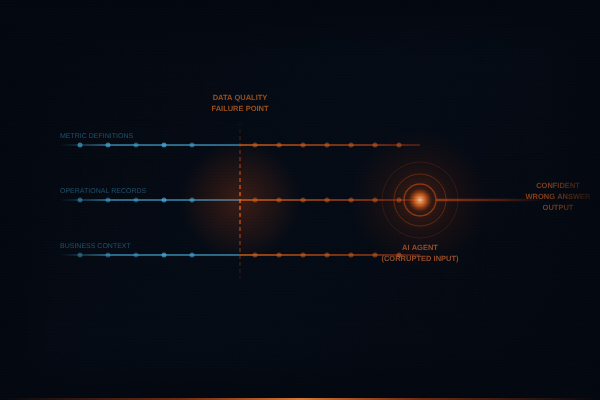
AI systems depend on high quality data, well defined workflows, and clear leadership direction. Without these foundations, AI initiatives frequently fail to deliver meaningful results. Harvard Business Review highlights that many AI projects underperform not because of technological limitations, but because organizations lack the structural foundation needed to support them.
Businesses that treat AI as a tool purchase rather than a strategic transformation often experience fragmented adoption, increased operational risk, and limited return on investment. In contrast, organizations that approach AI as a core business capability are better positioned to use it responsibly, securely, and effectively.
What Business Leaders Should Be Doing Now
Business leaders should treat artificial intelligence planning as an executive level responsibility. This includes evaluating where AI can create measurable business value, where it introduces operational or regulatory risk, and how it aligns with long term organizational objectives.
Effective AI adoption also requires investment in data governance, process clarity, and workforce readiness. Just as importantly, it requires expertise. Navigating AI transformation is not simply a technical challenge. It is a business challenge that touches strategy, operations, and organizational design.
Companies that work with experienced AI advisors are more likely to avoid costly missteps and build capabilities that support sustainable growth rather than short term experimentation.
Conclusion
The recent layoffs announced by major technology companies are not isolated events. They are early indicators of a broader shift that is already reshaping how businesses operate across industries.
Artificial intelligence will continue to influence how work is performed, how decisions are made, and how value is created. Organizations that prepare deliberately and strategically will retain greater control over this transition. Those that wait risk narrowing their options as competitive pressure intensifies.
The time to prepare for artificial intelligence is not after disruption arrives, it is before.