Full AI Automation vs. Human-In-the-Loop (HITL) — And Why Keeping Control Matters
There's a quiet shift happening in how developers work with AI, and it deserves more scrutiny than it's getting.
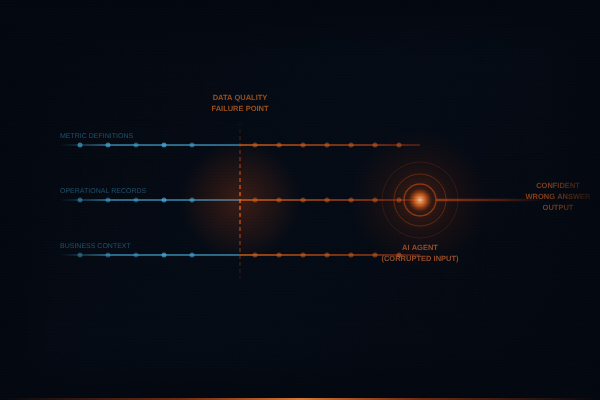
It's not about whether AI can write good code. It can. It's not about whether AI can make sound architectural suggestions, catch bugs, or refactor a messy function faster than a human would. It can do all of that too. The real issue is subtler, and more human: developers are increasingly trusting AI's decisions in places where trust hasn't been earned — not because the AI proved untrustworthy, but because nobody stopped to check.
This is a post about laziness — not AI's, but ours.
The Convenience Trap
Every powerful tool creates a temptation to stop paying attention. Autopilot didn't make pilots worse at flying — it made some pilots stop practicing the skill of flying while autopilot was engaged. AI coding assistants are creating a similar dynamic in software development, except the stakes show up in production, not at 35,000 feet.
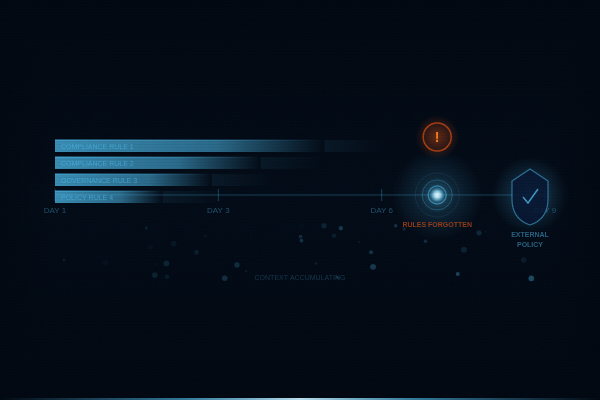
Here's the pattern: a developer starts by reviewing every AI-generated suggestion line by line. Over time, as the AI proves reliable in low-stakes situations, scrutiny relaxes. Eventually, the developer isn't reviewing anymore — they're rubber-stamping. And at some point, rubber-stamping quietly becomes full delegation.
The clearest example of this creep is granting AI the ability to auto-commit and auto-push to Git without a human in the approval chain. It sounds efficient. It sounds like the natural endpoint of "AI-assisted development." But it represents a fundamental transfer of judgment from a person who is accountable to a system that isn't.
Why This Isn't About AI's Competence
To be clear: this isn't an argument that AI produces bad code, or that automation is inherently reckless. Modern AI tools are remarkably capable, and in many workflows they outperform a distracted or rushed human.
The issue is architectural, not technical. It's about who is accountable when something goes wrong — and accountability doesn't transfer just because decision-making did.
If an AI system commits a change that introduces a security vulnerability, leaks a credential, breaks a downstream service, or violates a compliance requirement, the business doesn't get to say "the AI did it." The company is still liable. The client still churns. The breach still happened. Responsibility remains exactly where it always was: with the human and the organization that deployed the system. AI has no legal standing, no professional license, no skin in the game. It cannot be held accountable in any way that matters — which means every ounce of judgment it exercises unsupervised is judgment the business is quietly betting on without a backstop.
That asymmetry — full authority without full accountability — is precisely why unsupervised automation is a governance problem, not a technology problem.
What Human-in-the-Loop Actually Protects
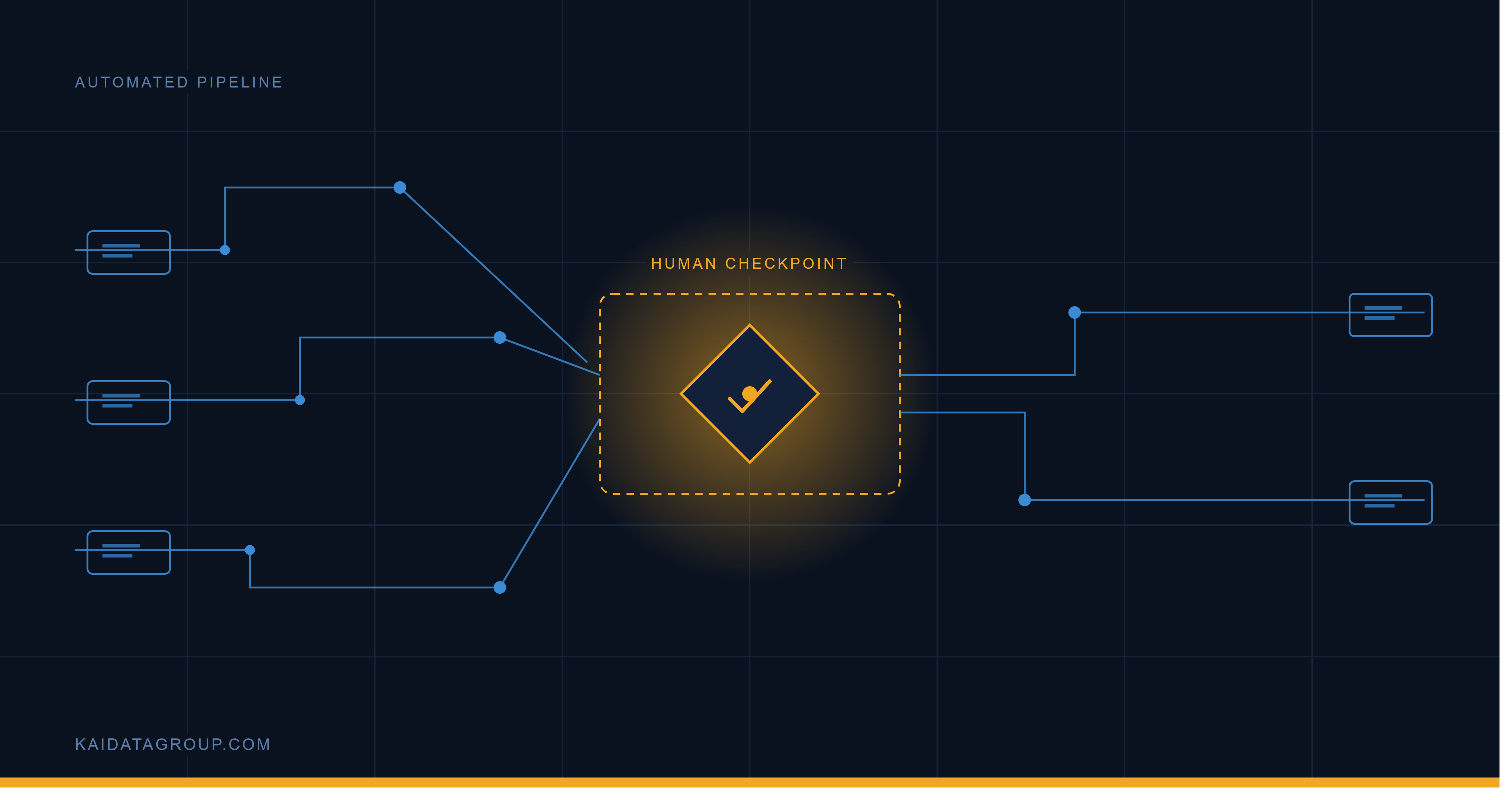
Human-in-the-Loop (HITL) isn't about slowing AI down or expressing distrust in its output. It's a checkpoint system — a deliberate pause where a human reviews, confirms, or overrides before a consequential action becomes permanent.
In practice, HITL means things like:
- A developer reviews and approves before code is committed or pushed — not after the fact, not on a sample basis, but as a standing rule.
- AI-generated infrastructure changes require sign-off before they touch production environments.
- Automated decisions with financial, legal, or customer-facing impact route through a person before execution, not just logging after the fact.
- AI has read and draft permissions by default; write and execute permissions are earned, scoped, and revocable — not granted wholesale out of convenience.
None of this requires distrust of the tool. It requires respect for the fact that some decisions are too consequential to be fully delegated, no matter how good the tool has been so far.
The Discipline Problem, Not the AI Problem
The uncomfortable truth is that most of the erosion happens for mundane reasons: a developer is short on time, doesn't fully understand what a tool is doing under the hood, or simply hasn't thought through the failure modes. None of that is malicious. All of it is human. And all of it is exactly the kind of gap that a well-designed HITL process is meant to close — not because the developer is careless, but because everyone eventually gets tired, rushed, or overconfident, and systems should be built assuming that.
This is the same reasoning behind why pilots still fly manually during takeoff and landing, why surgeons double-check imaging before an incision even when a scan looks routine, and why financial trades above a certain size still require a human sign-off despite decades of algorithmic trading maturity. The tool being good is not the same question as whether a human should remain the last checkpoint.
Businesses adopting AI at scale need to ask themselves a hard question: are we designing our AI workflows around what's convenient, or around what's defensible when someone eventually asks "who approved this?"
Where KAIDATA Fits In
At KAIDATA, this is exactly the kind of thinking we bring to every AI Strategy & Roadmap engagement. Anyone can help a business adopt more AI tools. Fewer people stop to ask the deeper questions: Where should the human stay in the loop? Which decisions are safe to automate, and which ones demand oversight regardless of how capable the AI becomes? What does responsible AI governance actually look like for your business, not a generic playbook?
This kind of deep thinking — the philosophical, governance-minded layer of AI transformation — is where we specialize. We don't just help you move fast with AI. We help you move safely, with the checks and balances in place so that adoption doesn't quietly turn into unmanaged risk.
If your team is scaling its use of AI and you want a partner who thinks as carefully about where control should stay human as they do about where automation should take over, that's a conversation worth having.
Schedule a free AI Strategy & Roadmap session with KAIDATA today!