The Rapid Expansion of AI Tools Is Creating a New Enterprise Challenge
Artificial intelligence adoption has accelerated rapidly across enterprises, with organizations deploying a growing number of tools to support productivity, analytics, automation, and decision making. Platforms such as Microsoft Copilot, OpenAI ChatGPT, and Anthropic Claude are now widely used across departments, while traditional software providers continue embedding AI capabilities into their existing platforms.
What initially appeared to be a competitive advantage has introduced a new operational challenge. Companies are now managing an increasingly fragmented AI stack composed of overlapping tools, disconnected data sources, and inconsistent workflows. Instead of accelerating execution, this fragmentation is beginning to slow organizations down.
The core issue is not the availability of AI technology. It is the lack of alignment across how these tools are deployed and integrated into enterprise operations.
Tool Proliferation Is Outpacing Strategic Alignment
Many organizations have approached AI adoption in a decentralized way. Individual teams often experiment with tools that solve immediate needs without considering how those tools fit into the broader technology ecosystem. Marketing teams may adopt one platform for content generation, while operations teams rely on another for forecasting, and finance teams introduce separate analytics tools.
Over time, this creates an environment in which multiple AI systems operate in parallel without coordination. Data is duplicated across platforms, workflows become inconsistent, and employees are forced to navigate multiple interfaces to complete routine tasks.
Companies such as Salesforce and Adobe are embedding AI directly into their platforms to reduce this fragmentation. However, even with these integrations, many organizations still struggle to define which tools should be standardized across the enterprise and how they should interact with one another.
This lack of alignment introduces inefficiencies that can offset the productivity gains AI is intended to deliver.
The Hidden Costs of a Fragmented AI Stack
A fragmented AI stack does not always present immediate problems. In many cases, early adoption appears to increase productivity at the individual level. However, as usage scales across the organization, underlying inefficiencies begin to surface.
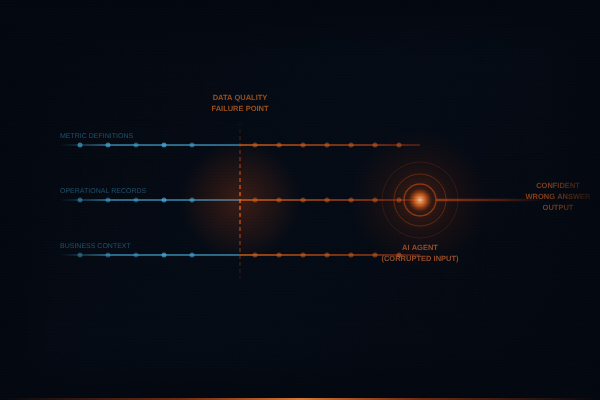
One of the most significant challenges is data inconsistency. When multiple AI tools operate on different datasets or versions of the same data, outputs become difficult to reconcile. This limits the ability of leadership teams to rely on AI driven insights for decision making.
Another issue is workflow fragmentation. Employees may need to move between multiple systems to complete tasks that should be integrated into a single process. This increases complexity and reduces operational efficiency.
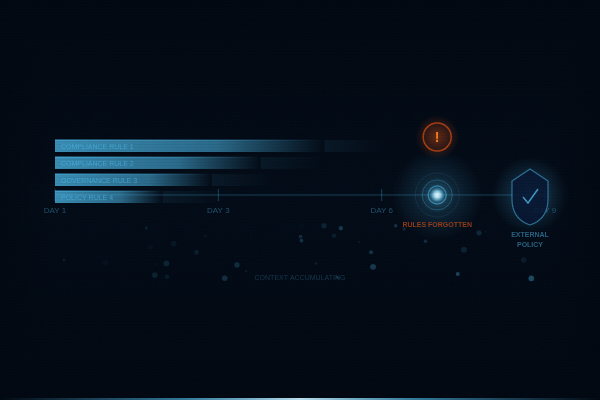
There are also governance concerns. As organizations deploy multiple AI tools, maintaining visibility into how data is used and how decisions are made becomes more difficult. This creates potential risks related to compliance, security, and accountability.
These challenges illustrate that the cost of AI fragmentation is not always visible at the outset. It emerges over time as organizations attempt to scale adoption without a unified strategy.
Leading Organizations Are Moving Toward AI Stack Consolidation
In response to these challenges, leading organizations are beginning to consolidate their AI stacks around a smaller set of integrated platforms. Rather than adopting new tools for each use case, companies are focusing on building cohesive ecosystems that allow AI capabilities to operate across multiple business functions.
Cloud platforms such as Microsoft Azure and Amazon Web Services are playing a central role in this transition. These environments enable organizations to centralize data, deploy machine learning models, and integrate AI capabilities into existing workflows.
By standardizing on fewer platforms, companies can improve data consistency, streamline workflows, and create a more unified operational environment. This approach allows AI to function as part of a broader system rather than a collection of disconnected tools.
The Shift From AI Tools to AI Systems
As organizations mature in their AI adoption, the focus is shifting from individual tools to integrated systems. AI is no longer viewed as a standalone capability but as a layer embedded within enterprise operations.
This shift requires companies to rethink how AI is deployed across their business. Instead of asking which tools to adopt, organizations must determine how AI can support end to end workflows and drive measurable outcomes.
This perspective changes the role of AI from a productivity enhancer to an operational enabler. Companies that make this transition are better positioned to scale AI across the enterprise while maintaining efficiency and control.
Why Strategy Determines the Success of the AI Stack
The effectiveness of an AI stack depends on how well it is aligned with business objectives. Organizations that adopt tools without a clear strategy often create environments that are difficult to manage and scale.
A well structured AI strategy focuses on defining where AI can deliver the greatest impact, how data should be managed, and how systems should interact across the organization. This approach ensures that technology investments support long term operational goals rather than short term experimentation.
Without this level of alignment, companies risk building fragmented systems that limit the potential value of artificial intelligence.
The Role of Consulting Firms in AI Stack Optimization
As organizations navigate the complexity of AI adoption, consulting firms are increasingly helping companies evaluate and optimize their AI stacks. This involves assessing existing tools, identifying redundancies, and defining strategies for consolidation and integration.
Consulting teams work with leadership to map how data flows through the organization and where AI capabilities can be applied most effectively. This process helps companies reduce complexity while improving the impact of their AI investments.
By aligning technology with operational strategy, consulting firms enable organizations to move from fragmented adoption to cohesive execution.
How KAIDATA Consulting Helps Organizations Simplify the AI Stack
At KAIDATA Consulting, we help organizations cut through the complexity of AI adoption by focusing on alignment rather than proliferation. Our approach is centered on identifying where artificial intelligence can deliver measurable value and ensuring that those capabilities are integrated into a unified operational framework.
We work with leadership teams to evaluate their current AI stack, identify inefficiencies, and develop strategies that simplify technology environments while improving performance. This allows organizations to move beyond tool driven adoption and build systems that support long term growth.
As artificial intelligence continues to evolve, companies that prioritize alignment and integration will be better positioned to capture its full value. Those that allow fragmentation to persist will find that complexity becomes a barrier to progress.